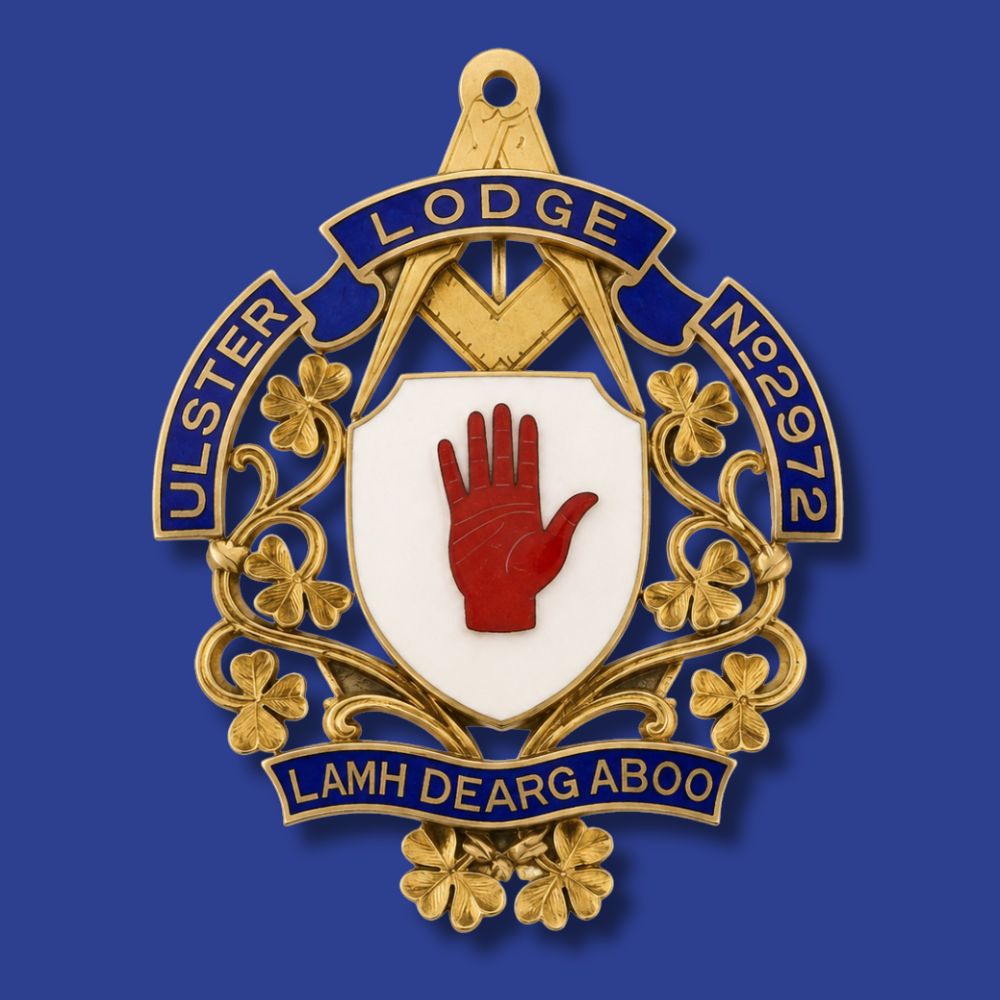
Ulster Lodge No. 2972 was founded for Ulstermen in London, but its history shows that it quickly became part of a much wider Irish Masonic network in the capital.
The Lodge’s 1953 Jubilee Review records especially warm relations with other Irish-associated Lodges in London.
Three close London connections
The booklet names three Lodges in particular:
- Lodge of Erin No. 2895
- Trinity College Lodge No. 3153
- London Irish Rifles Lodge No. 2312
Reciprocal visits were made on installation nights, creating a regular flow of brethren between the Lodges rather than occasional formal contact.
The relationship with Lodge of Erin went back to the beginning. Lodge of Erin was one of the two Lodges that sponsored Ulster Lodge when it was formed in 1903.
Visitors from Ireland were part of Lodge life
The Jubilee Review says brethren from Ireland were present at most Ulster Lodge meetings and were given a particularly cordial welcome.
It also records that the Grand Master of Ireland, the Grand Secretary and Provincial Grand Masters were honorary members of the Lodge.
For several years the Earl of Donoughmore, then Grand Master of Ireland, attended installation meetings and took part in the ceremony. In later years Sir Frank Newson-Smith, a former Lord Mayor of London and senior English Freemason, also assisted.
These connections mattered because they reflected the original purpose of the Lodge: to give Ulster Masons in London a home while keeping a living connection with Irish Freemasonry.
London Lodge, Irish roots
Ulster Lodge worked under the United Grand Lodge of England, but its founders never intended it to lose the character that had brought them together.
The early history shows a Lodge comfortable in both worlds. It could take its place in English Freemasonry while welcoming brethren from Ireland, maintaining friendships with Irish-associated London Lodges and drawing senior visitors from both jurisdictions.
That is still one of the most useful ways to understand Ulster Lodge today. It is a London Lodge with a particular history, but its story belongs to the wider history of Irish people and Irish Freemasonry in London.
Related reading
- The 1928 Semi-Jubilee and Lord Ampthill’s tribute
- The story of Ulster Lodge’s Red Hand badge and banner
- Four unusual moments from Ulster Lodge’s first fifty years
Source: Ulster Lodge No. 2972, A Jubilee Review, 1953.
1 thought on “Ulster Lodge and the Irish Masonic network in London”
Comments are closed.