How Ulster Lodge secured its place at Freemasons’ Hall
Ulster Lodge spent years at the Hotel Cecil, but a clever change to its meeting arrangements in 1929 helped secure a permanent place at Freemasons’ Hall.
The history, meetings, traditions and milestones of Ulster Lodge No. 2972.
Ulster Lodge spent years at the Hotel Cecil, but a clever change to its meeting arrangements in 1929 helped secure a permanent place at Freemasons’ Hall.
A father and three sons, a reigning Master’s wedding, a wartime joint meeting and a trip to Portrush all appear in Ulster Lodge’s 1953 account of its most unusual moments.
A duke, generals, senior lawyers, politicians, a High Commissioner and leading Freemasons appear in Ulster Lodge’s own 1953 roll-call of distinguished members.
Ulster Lodge was never an isolated London Lodge. Its 1953 history records close links with Irish lodges in the capital and regular visitors from Ireland.
Much of Ulster Lodge’s early documentary history vanished in a single night when its stored records were destroyed during a major air raid on the City of London in May 1941.
For decades, Ulster Lodge maintained a Lodge of Instruction where brethren trained for office and rehearsed the ceremonies. Its 1953 history records the men who kept it going.
Ulster Lodge’s 1928 Semi-Jubilee brought together an extraordinary gathering of senior Freemasons and produced one of the strongest tributes in the Lodge’s history.
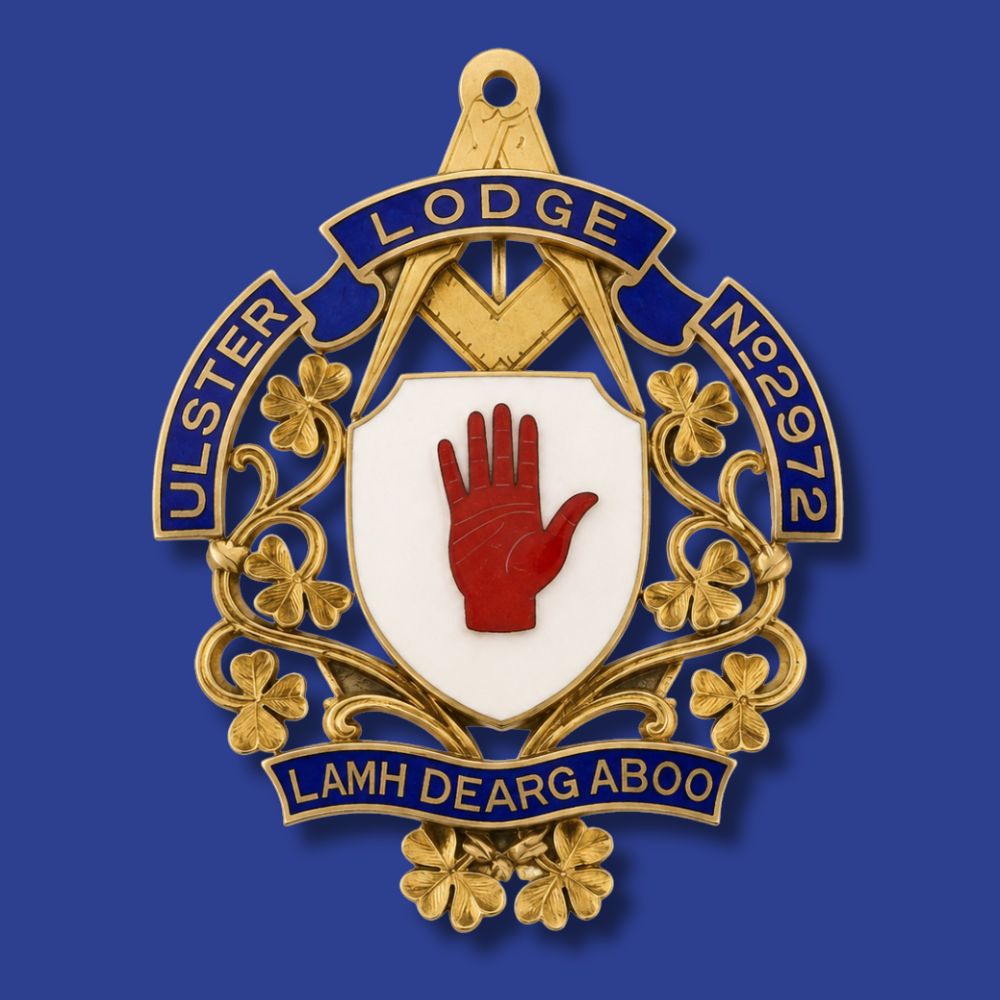
The Red Hand has been part of Ulster Lodge’s identity for generations. The Lodge’s 1953 Jubilee Review explains both the badge and the banner presented in 1909.
Ulster Lodge earned Hall Stone status by supporting the memorial fund that helped build Freemasons’ Hall after the First World War.
Ulster Lodge never abandoned a meeting during the Second World War. On one extraordinary day, a flying bomb passed directly over Freemasons’ Hall while a ceremony was under way.