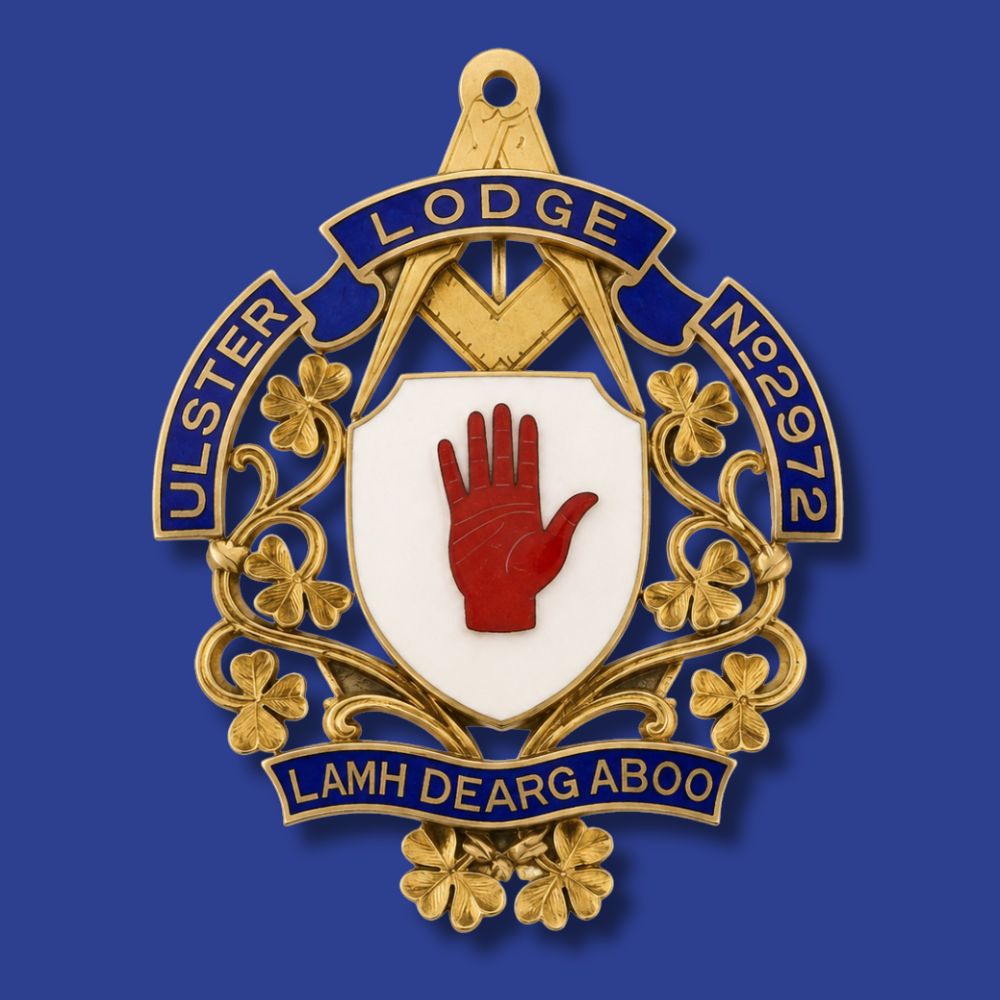
Ulster Lodge No. 2972 is a Hall Stone Lodge, an honour rooted in the years after the First World War and the building of the present Freemasons’ Hall in London.
The story is recorded in the Lodge’s 1953 Jubilee Review.
A memorial to the fallen
After the First World War, Grand Lodge launched a major memorial fund to create a national peace memorial to Freemasons who had died during the conflict. That project eventually produced the great building in Great Queen Street known today as Freemasons’ Hall.
Lodges were invited to support the appeal. The Jubilee Review explains that a Lodge contributing the prescribed amount over a five-year period could qualify as a Hall Stone Lodge.
Ulster Lodge decided that it wanted to do exactly that.
£777 raised by the Lodge
W. Bro. A. N. Harper was appointed to organise the effort. The 1953 booklet says he applied himself to the task with considerable energy.
The final amount subscribed for Ulster Lodge’s Hall Stone qualification was £777.
That was a substantial sum for the period and represented a deliberate decision by the members to associate the Lodge with the memorial project.
What Hall Stone status meant
Hall Stone Lodges were recognised for completing their contribution to the memorial fund. The Lodge received a commemorative medal, while the serving Master was entitled to wear the distinctive Hall Stone jewel as a collarette during his year in office.
For Ulster Lodge, the distinction became part of a wider story. The Lodge had spent many years meeting at the Hotel Cecil on the Strand, but in 1929 it altered its meeting arrangements so that it could secure accommodation at the old Freemasons’ Hall in Great Queen Street. When the new Peace Memorial building opened in 1933, the Lodge moved into the new premises with the existing tenants.
So Ulster Lodge did not simply contribute towards the building. It became one of the Lodges meeting within the memorial its members had helped to fund.
A connection still visible today
More than a century after the appeal began, Hall Stone status remains one of the clearest links between Ulster Lodge’s present life at Freemasons’ Hall and the generation of members who came through the First World War.
It is a small badge with a very large story behind it.
Related reading
- How Ulster Lodge secured its place at Freemasons’ Hall
- The 1928 Semi-Jubilee and Lord Ampthill’s tribute
- The day a flying bomb passed over Ulster Lodge
Source: Ulster Lodge No. 2972, A Jubilee Review, 1953.