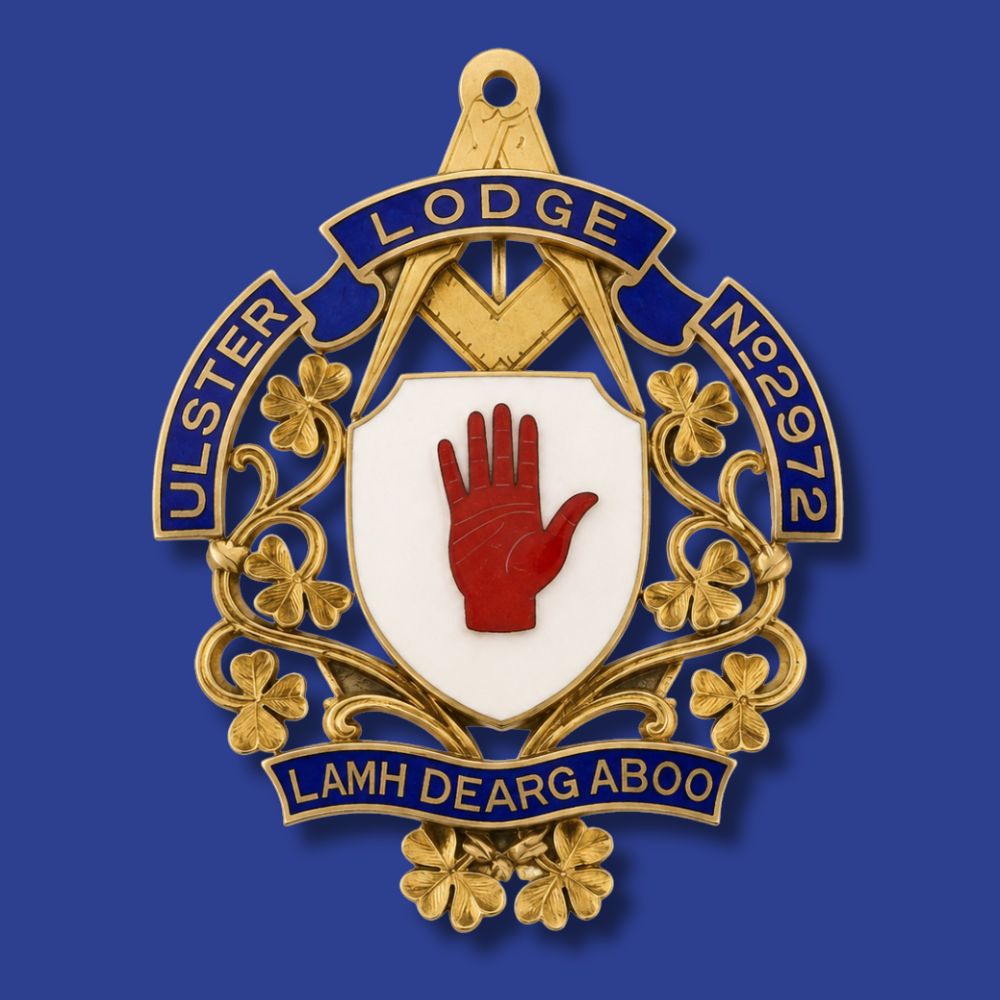
Ulster Lodge No. 2972 did not simply arrive at Freemasons’ Hall. Its members made a deliberate move to secure a place there before the present building had even opened.
The Lodge’s 1953 Jubilee Review tells the story.
Years at the Hotel Cecil
For many years Ulster Lodge met at the Hotel Cecil on the Strand, the grand London hotel where the Lodge had also been consecrated in 1903.
By the late 1920s, however, the Masonic Peace Memorial project in Great Queen Street was nearing completion. The new building promised to become the principal home of English Freemasonry.
Ulster Lodge wanted to be there.
Competition for space
The Jubilee Review says that London then had 1,543 Lodges. Many of them naturally hoped to obtain accommodation in the new Masonic headquarters, and not everyone could be successful.
Ulster Lodge found an ingenious solution through the advice of the late W. Bro. Sir Robert McCall, a member of the Lodge and Grand Lodge.
In 1929 the Lodge changed the day and hour of its meetings. That allowed it to move into the old Freemasons’ Hall in Great Queen Street before the new Peace Memorial building was ready.
Existing tenants of the old Hall
That move proved decisive.
When the present Freemasons’ Hall opened in 1933, the existing tenants of the old building passed automatically into the new premises. Ulster Lodge therefore secured its headquarters in what the 1953 booklet proudly described as the greatest Masonic building in the world.
The Lodge had effectively got its foot in the door four years earlier.
The Ulster Room
There was another sign of the Lodge’s place within the complex.
The Jubilee Review records that the management of the adjoining Connaught Rooms, which catered for Masonic dinners, designated one of its banqueting rooms “The Ulster Room”.
For a Lodge created by Ulstermen in London only thirty years earlier, that must have carried a particular resonance.
From the Strand to Great Queen Street
The move from the Hotel Cecil to Freemasons’ Hall was therefore more than a change of venue. It marked Ulster Lodge becoming permanently established within the institutional heart of English Freemasonry while retaining the identity that had inspired its foundation.
Nearly a century later, Ulster Lodge still meets at Freemasons’ Hall. The 1929 decision turned out to be one of the most important practical choices in its history.
Related reading
- Why Ulster Lodge is a Hall Stone Lodge
- The day a flying bomb passed over Ulster Lodge
- The 1928 Semi-Jubilee and Lord Ampthill’s tribute
Source: Ulster Lodge No. 2972, A Jubilee Review, 1953.
1 thought on “How Ulster Lodge secured its place at Freemasons’ Hall”
Comments are closed.